ChatGPT
 Claude
 Gemini
 Grok
How to Build an eCommerce App Like Noon? : A Complete Guide
TLDR
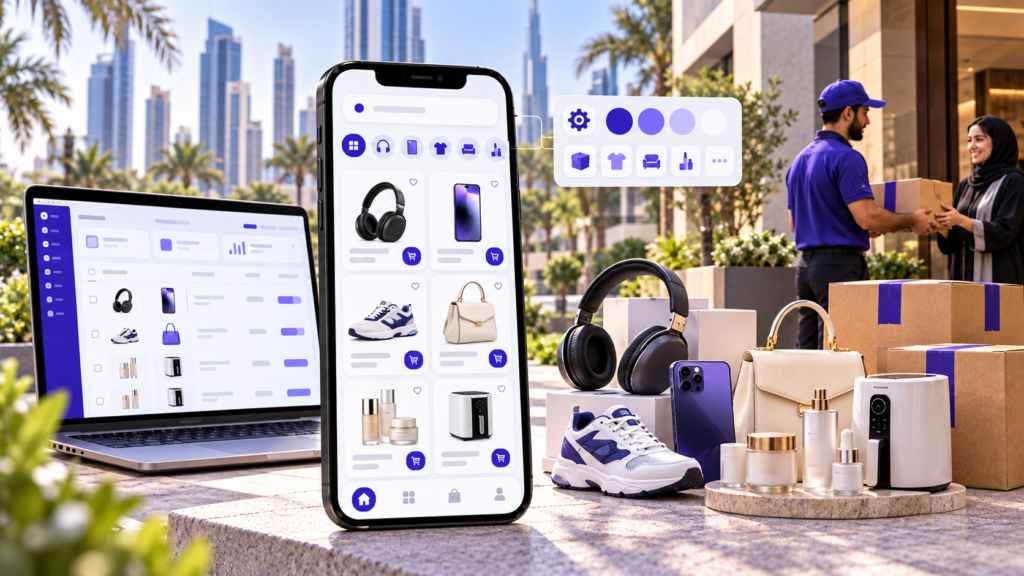
To build an eCommerce app like Noon, you need four connected products: a customer app, a seller portal, an admin console and a delivery layer that handles both warehouse shipping and 15 to 60 minute local delivery. Start with a multi-vendor marketplace MVP in one city or country, then add quick commerce, food and a membership plan once order volume justifies the extra logistics. A focused MVP typically costs USD 40,000 to 90,000 and takes 4 to 6 months; a full Noon-scale ecosystem runs well past USD 250,000. Teams that need to launch faster can start the delivery side on a white-label platform such as DeliveryStack and build custom only where they compete.
What is Noon and how does its app work?
Noon is a Middle East commerce platform founded in 2016 that runs a multi-vendor marketplace, quick commerce, food delivery and payments from one app across the UAE, Saudi Arabia and Egypt. Customers buy from Noon’s own stock and from third-party sellers, then choose a delivery speed that ranges from minutes to next day.
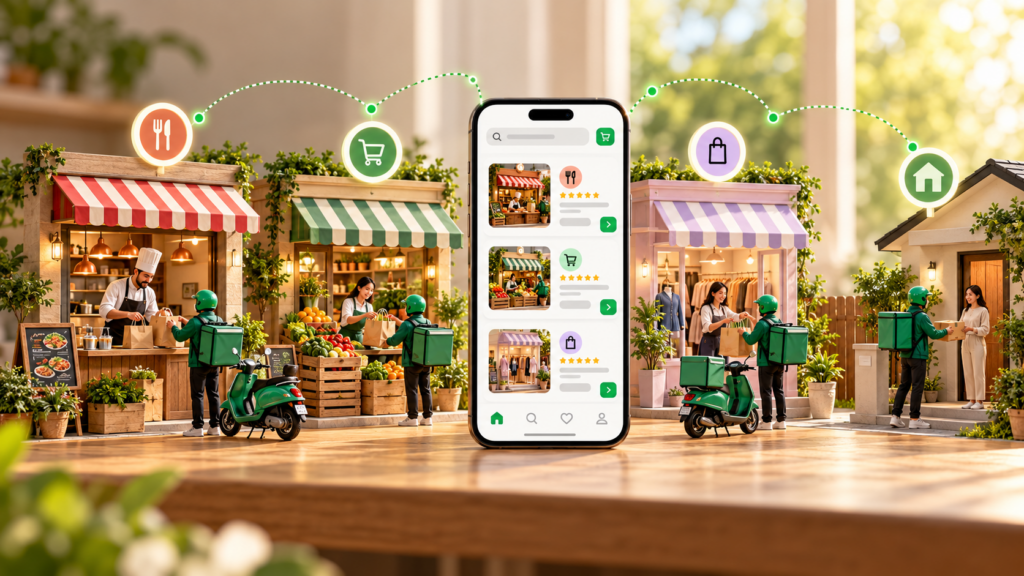
The important point for anyone copying the model is that Noon is not one app. It is several businesses sharing one login, one wallet, one membership and one delivery network. Each business has its own logistics rules.
The four services inside the Noon app
Marketplace. The core catalogue sells electronics, fashion, beauty and home goods. Sellers either ship themselves or store stock in Noon’s warehouses. Items held in Noon’s warehouses carry a “noon Express” badge and ship fast, according to Noon’s seller help centre.
noon Minutes. This is the quick commerce arm for groceries and daily essentials, served from dark stores. Noon’s help pages describe delivery in as little as 15 minutes in the UAE and 20 minutes in Saudi Arabia, with free delivery above a small basket value (noon help centre).
supermall. A brand-authorised storefront with delivery in about 60 minutes, faster returns and an authenticity promise.
noon Food. Restaurant delivery inside the same app, with live rider tracking.
A paid membership, noon One, ties these together with free delivery across services. That membership is the retention engine. It turns a once-a-month electronics buyer into a several-times-a-week grocery buyer.
Why founders want to build an app like Noon
Noon proved that a regional player can compete with a global giant by owning delivery speed and local payment habits. It launched in the same period that Amazon bought Souq.com and has since raised large rounds, including USD 500 million in late 2025 ahead of a possible IPO. The lesson for a new entrant is not to copy every vertical. It is to pick one market where local delivery, language and payments are underserved, and win there first.
Which business model should an app like Noon use?
An app like Noon should use a hybrid marketplace model: third-party sellers list products and pay a commission, the platform optionally sells its own stock, and paid fulfilment, ads and memberships add revenue on top. Commission alone rarely covers delivery costs, so plan at least two other income lines from launch.
How Noon makes money
Noon publishes its seller fees, which makes it a useful benchmark. In the UAE, the referral fee is 14% for most categories and 27% for apparel and footwear, with a minimum of 1 AED per item (Noon FBN fees, UAE). Sellers who use Noon’s warehouses also pay outbound and storage fees.
Referral commission. The platform takes a percentage of each sale, set per category. Your app needs category-level fee rules, clear seller statements and scheduled payouts to support it.
Fulfilment fees. Sellers pay per-unit charges for pick, pack and ship, plus storage. This needs warehouse inventory, inbound shipment tracking and fee slabs by weight and size.
First-party retail. The platform buys stock and resells it at a margin. That calls for purchasing, stock forecasting and pricing tools.
Membership. Customers pay a monthly fee for free delivery and member deals. The app has to manage subscriptions and apply entitlements across every service.
Retail media. Sellers pay for sponsored listings and banners. You need either an ad auction or fixed placements, plus campaign reporting sellers can trust.
Delivery fees. Small baskets and express slots carry a charge. Build dynamic fee rules by zone, time of day and basket value.
Seller fulfilment or platform fulfilment?
Noon runs two seller models side by side. With Fulfilled by Partner, the seller stores stock and ships orders. With Fulfilled by noon, the seller sends stock to Noon and Noon handles delivery, returns and customer queries (Noon seller onboarding FAQ).
For a new platform, start with seller fulfilment plus your own last-mile riders. A warehouse programme needs capital, a warehouse management system and steady volume. The downside of skipping it is slower, less consistent delivery, which customers notice. Add platform fulfilment for your top sellers once you can fill a warehouse.
What features does an eCommerce app like Noon need?
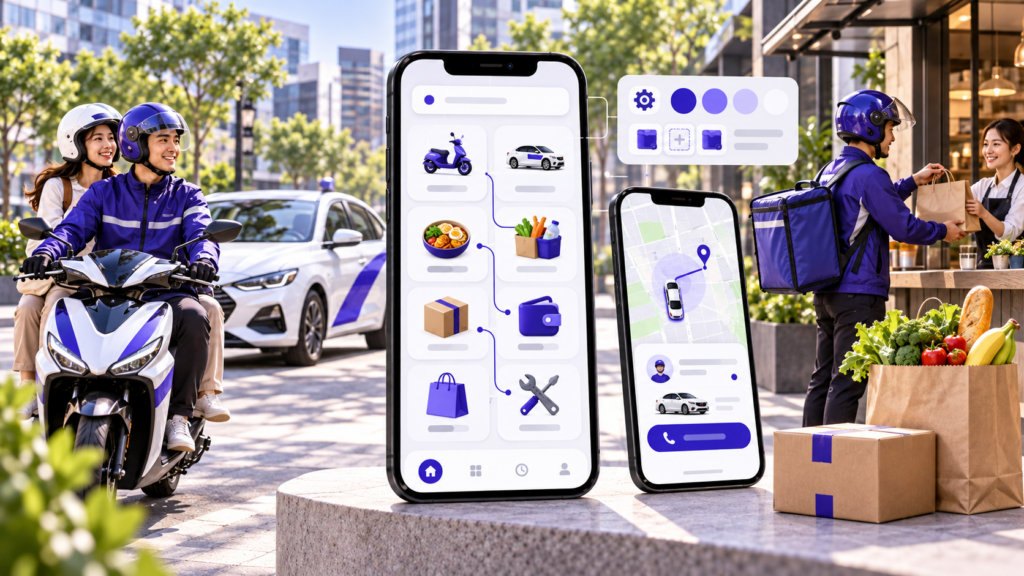
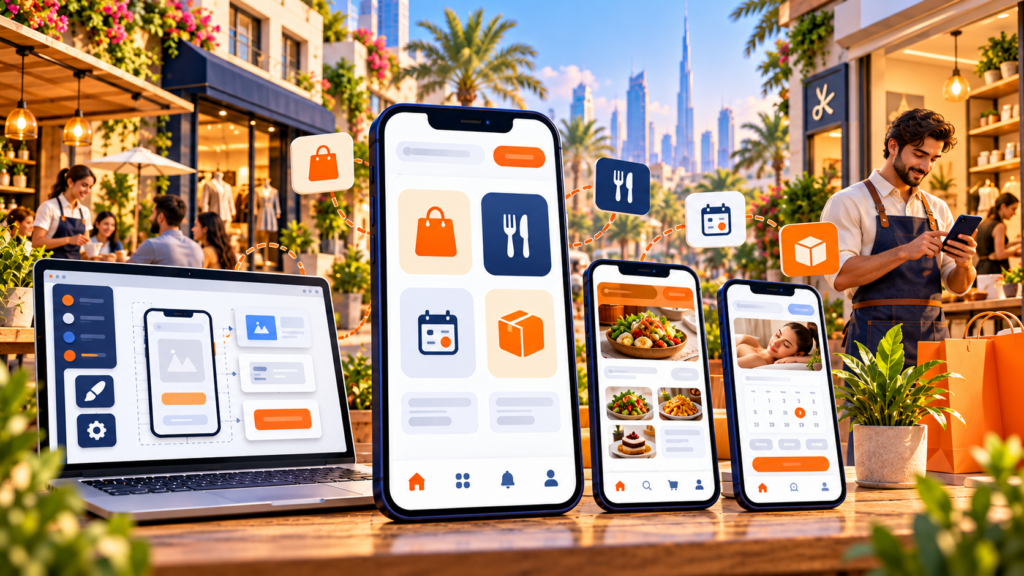
An eCommerce app like Noon needs four connected panels: a customer app, a seller portal, an admin console and a delivery app for riders and dispatchers. The customer app gets the attention, but the seller and delivery panels decide whether orders actually arrive on time. Budget roughly half your build effort for the parts customers never see.
Customer app (iOS and Android)
Account and onboarding. Phone number login with OTP, social login, saved addresses with map pins, and Arabic and English with full right-to-left layout. In the Gulf, RTL done properly is a launch requirement, not a later polish task.
Discovery. Category browsing, search with typo tolerance and Arabic transliteration, filters, sort, and personalised home sections. Search quality drives conversion more than any banner.
Product pages and offers. Images, specs, ratings, multiple sellers per product with a default “buy box”, stock and delivery promise shown before checkout.
Cart and checkout. Split baskets when items ship at different speeds, coupons, wallet balance, cards, Apple Pay, cash on delivery and buy now pay later options such as Tabby or Tamara.
Tracking and post-order. Live order status, rider tracking on a map for local deliveries, returns, refunds to wallet, and in-app chat or support tickets.
Membership and loyalty. Subscription sign-up, free-delivery entitlement across services, and member-only prices.
Seller portal (web)
Onboarding and KYC. Trade licence upload, VAT number, bank details and approval workflow.
Catalogue tools. Bulk upload by spreadsheet, matching to existing products so the catalogue does not fill with duplicates, and category-specific attributes.
Orders and stock. Order acceptance, packing slips, shipping labels, stock sync by API for larger sellers, and fulfilment choice per product.
Finance. Fee breakdown per order, weekly statements, payout history and dispute handling. Sellers trust a platform whose statements they can reconcile.
Ads and promotions. Sponsored listings, deal submissions for sale events, and performance reports.
Admin console (web)
Catalogue and content control. Category tree, attribute templates, approval queues, banner and campaign management.
Commercial rules. Commission by category, delivery fees by zone, coupon budgets and membership pricing.
Operations. Order exceptions, returns, fraud flags, customer support tools, and seller performance scoring with penalties.
Reporting. GMV, orders, conversion, delivery times and seller payouts by market.
Delivery layer (rider app plus dispatch)
Rider app. Shift login, order offers, navigation, proof of delivery by photo or OTP, cash collection and earnings.
Dispatch and routing. Zone management, auto-assignment to the nearest free rider, batching several orders into one trip and live ETA updates to the customer.
Dark store or warehouse tools. Pick lists, packing, and handover scans so a 15 minute promise is achievable.
What to launch with and what can wait
The customer app must launch with bilingual RTL screens, search, cart, payments, cash on delivery and order tracking. Membership, AR try-on and voice search can follow in phase two.
The seller portal needs KYC, catalogue upload, order handling and statements on day one. Ads, API stock sync and seller analytics can wait until large sellers ask for them.
The admin console should ship with category rules, approval queues, refunds and core reports. Advanced fraud scoring and A/B testing are later additions.
The delivery layer needs rider assignment, proof of delivery and live tracking at launch. Order batching, dark store picking and autonomous delivery belong in later phases, once volume justifies them.
How do you handle delivery and quick commerce like noon Minutes?
You handle Noon-style delivery by running two logistics models in one system: scheduled parcel delivery from warehouses or sellers, and on-demand delivery from dark stores or restaurants within a small radius. Both share the same rider pool, tracking and customer notifications, but they use different promise rules, zones and dispatch logic.
Delivery tiers and what each needs
Standard marketplace delivery. Orders arrive next day to three days, shipped from the seller’s premises or a warehouse. The software needs carrier integration, label printing and tracking events.
Express delivery from platform stock. Same-day or next-day orders ship from the platform’s own warehouse. This depends on a warehouse management system, order cut-off times and route planning.
supermall-style delivery. Orders arrive in about 60 minutes from a city hub. You need hub-level inventory, delivery slot booking and rider dispatch.
Quick commerce. Orders arrive in 15 to 30 minutes from a dark store within 2 to 4 km of the customer. This needs real-time stock, a pick and pack app and instant rider assignment.
Food delivery. Orders arrive in 25 to 45 minutes from the restaurant. The software needs a restaurant tablet or POS link, preparation time estimates and rider batching.
Noon also extended its reach through partnership rather than building everything. In 2025 it linked noon Minutes into the Jahez food app in Saudi Arabia and brought Jahez restaurants into the noon app. For a newer platform, that is a reminder that APIs for partners belong in the architecture early.
Why delivery software is where most clones fail
The customer app is easy to imitate. The delivery promise is not. A 15 minute promise depends on accurate stock in each dark store, a picker who finds items in under three minutes, and a dispatcher that assigns the right rider in seconds. If any one of those is wrong, refunds and bad reviews pile up within weeks.
This is the layer DeliveryStack is built for. It is Aalpha Information Systems’ white-label on-demand delivery platform, with customer, rider, store and admin apps already working together. A team building a Noon-style app can put its own brand on the delivery side, launch in one city, and spend custom development budget on the marketplace features that set it apart. The trade-off is less control over the core dispatch logic than a ground-up build, so check that its zone and assignment rules match your market before committing.
What tech stack should you use for an app like Noon?
A practical stack for an app like Noon is React Native or Flutter for the mobile apps, Next.js for the web storefront and panels, Node.js services for the backend, PostgreSQL for orders and payments, Redis for carts and sessions, and Elasticsearch or OpenSearch for search. Host on AWS or Google Cloud in a region close to your customers.
Mobile apps. React Native or Flutter gives one codebase for iOS and Android and cuts build time by roughly a third. Heavy animations and map screens still need native tuning.
Web storefront and panels. Next.js renders product and category pages on the server, which helps SEO. Prices and stock change often, so the caching strategy needs care.
Backend. Node.js services split by domain, such as catalogue, orders, payments and delivery, are fast to build and handle real-time work well. Splitting into too many services too early slows a small team.
Main database. PostgreSQL suits orders, payouts and refunds because that data is relational and must stay consistent. Plan read replicas before your first big sale event.
Search. Elasticsearch or OpenSearch brings Arabic analysers, typo tolerance and faceted filters. It needs its own tuning and monitoring.
Real-time updates. WebSockets with Redis pub/sub carry live rider locations and order status. Watch battery use on rider phones.
Maps. Google Maps Platform or Mapbox handles geocoding, routing and ETAs. Usage costs climb quickly once live tracking is on.
Payments. Checkout.com, Adyen, Stripe, local gateways and BNPL providers like Tabby or Tamara cover cards, wallets and instalments. Each market needs its own local methods.
Notifications. Firebase Cloud Messaging, SMS and WhatsApp APIs reach customers where they actually read updates. WhatsApp message templates need approval first.
Cloud. AWS or Google Cloud in Middle East regions lowers latency and helps with data residency rules. Some regional zones lack services you may rely on elsewhere.
Noon itself works with large payment providers such as Adyen for card processing and risk controls. A new platform does not need that scale on day one, but it should keep the payment layer behind its own interface so a gateway can be swapped without touching checkout.
We prefer a modular monolith for the first release rather than dozens of microservices. A team of eight to twelve engineers ships faster with one deployable backend split into clear modules, and the modules can be pulled out into services when traffic proves which ones need it.
How do you build an eCommerce app like Noon step by step?
Build an app like Noon in eight stages: pick one launch market and category set, validate demand with sellers, define the MVP scope, design bilingual flows, build the four panels in parallel, integrate payments and delivery, test under sale-day load, then launch in one city and expand by data. Skipping the seller validation step is the most expensive shortcut.
- Choose the market and the wedge. Pick one country and two or three categories where you can beat incumbents on price, speed or selection. Noon’s breadth took years and very large funding to build.
- Sign sellers before you write code. Get letters of intent from 30 to 50 sellers. Their catalogue size and fulfilment ability decide your delivery model.
- Write the MVP scope. List features per panel, mark each launch or later, and set the delivery promise you can keep from day one.
- Design for Arabic and English together. Design RTL screens at the same time as LTR, not after. Test with real users in both languages.
- Build the panels in parallel. Customer app, seller portal, admin console and rider app share one backend and one data model. Two-week sprints with a working demo each sprint keep scope honest.
- Integrate payments, maps and delivery. Local gateway, cash on delivery reconciliation, buy now pay later, map provider and either your own rider network or a white-label delivery platform.
- Test for the busiest day, not the average day. Load-test checkout and search at ten times your expected peak. Sale events like Yellow Friday or 11.11 expose weak caching first.
- Launch small and expand by data. Open in one city, track delivery time, cancellation rate and repeat purchase, then add zones, categories and quick commerce once those numbers hold.
How much does it cost to build an app like Noon, and how long does it take?
A focused MVP of an app like Noon costs about USD 40,000 to 90,000 and takes 4 to 6 months with an offshore team. Adding quick commerce and membership adds USD 30,000 to 60,000. A full Noon-scale ecosystem with food, wallet and several countries passes USD 250,000 and takes 12 to 18 months. Western agency rates multiply these figures several times.
Cost by build phase
These estimates assume a blended rate of USD 20 to 25 per hour, which matches Aalpha Information Systems’ published rates of USD 15 to 25 per hour (Aalpha cost calculators), and cross-platform mobile apps.
Discovery and design. Scope, user flows, bilingual UI design and architecture take 250 to 450 hours. That costs about USD 5,000 to 11,000 over 3 to 5 weeks.
Marketplace MVP. The customer app, seller portal, admin console, payments and basic delivery with tracking take 1,750 to 3,150 hours. Expect USD 35,000 to 79,000, with the full MVP ready in 4 to 6 months including design.
Quick commerce add-on. Dark store inventory, a picker app, instant dispatch and membership take 1,500 to 2,400 hours. That adds USD 30,000 to 60,000 and another 3 to 4 months.
Full ecosystem. A food vertical, wallet, ads platform, warehouse management and multi-country support push the total past 10,000 hours. Budget USD 250,000 or more and 12 to 18 months.
The same hours at Western European or UK agency rates cost roughly five times as much, based on the regional rate comparison in Aalpha’s web development cost calculator. For a first estimate on your own feature list, use the eCommerce development cost calculator.
What pushes the cost up
Number of delivery tiers. Each extra tier, such as 60 minute or 15 minute delivery, adds its own inventory, dispatch and support logic.
Markets and languages. Each country brings its own payment methods, tax rules, address formats and sometimes data residency rules.
Seller tooling depth. API stock sync, ads and detailed statements are what large sellers ask for first, and they take real effort.
Running costs. Plan for cloud hosting, map API usage, SMS and WhatsApp messages, and maintenance at roughly 15% to 20% of the build cost each year. Map and messaging bills grow with order volume, so model them per order.
Should you build from scratch or use a white-label platform?
Build from scratch when your marketplace logic is the product and you have 6 months and a six-figure budget. Use a white-label platform when speed to market matters more and your edge lies in sellers, pricing or local reach. Many teams combine both: white-label delivery with a custom marketplace on top.
Custom build. An MVP takes 4 to 6 months and has the highest upfront cost. In return you get full control over features and you own the code. It suits funded platforms with unusual business rules. The main risk is scope creep and a slow launch.
White-label platform. Launch can happen in weeks, depending on branding and setup, at the lowest upfront cost. Features are limited to the vendor’s roadmap and configuration, and the code is usually licensed rather than owned. It suits retailers, grocers and local delivery startups testing a city. The main risk is hitting the platform’s limits as you grow.
Hybrid build. A custom marketplace on top of white-label delivery launches in about 3 to 4 months at a mid-range cost. You keep full control of the marketplace, while delivery stays configurable. It suits marketplaces where delivery speed matters but is not the unique feature. The main risk is the integration between the two systems.
If you take the white-label route, ask three things before signing. Can you export your customer and order data at any time? Can the vendor add custom features for you, and at what rate? Does the licence allow you to run in more than one country? DeliveryStack is designed for this hybrid path, because the delivery apps are ready while the marketplace layer can be built custom by the same team.
What mistakes sink Noon-style apps?
Most Noon-style apps fail on operations, not code. The usual causes are launching too many categories at once, promising delivery times the logistics cannot keep, weak seller onboarding that fills the catalogue with duplicates, and treating Arabic as a translation job. Each problem shows up in reviews within the first month.
Copying the full ecosystem on day one. Noon added Minutes, Food and supermall over several years. A new app that launches five verticals at once spreads riders, budget and support too thin. Pick one.
A delivery promise you cannot keep. Showing “20 minutes” and arriving in 50 loses the customer. Show the promise per address based on real rider and stock availability, and under-promise at launch.
Catalogue chaos. Without product matching, ten sellers create ten listings of the same phone. Build matching and attribute rules into the seller portal before you onboard at scale.
Ignoring cash on delivery. COD is still common in parts of the Gulf and Egypt. It needs rider cash collection, daily reconciliation and fraud checks, which teams often leave out of the first scope.
Weak Arabic experience. Mirrored layouts, Arabic search and correct number and date formats are product work. Customers notice a translated English app immediately.
No plan for sale-day traffic. Mega sales concentrate a week of orders into hours. Load testing, caching and queue-based order processing need to be in place before the first big campaign.
Frequently asked questions
What is a Noon clone app?
A Noon clone app is a multi-vendor eCommerce app modelled on Noon’s structure: a customer app, a seller portal, an admin console and a delivery layer. Good clones copy the model, not the brand or design, and adapt delivery, payments and language to their own market.
How much does it cost to build an app like Noon?
A marketplace MVP costs about USD 40,000 to 90,000 with an offshore team at USD 20 to 25 per hour. Quick commerce and membership add USD 30,000 to 60,000. A full multi-country ecosystem costs USD 250,000 or more.
How long does it take to build an eCommerce app like Noon?
An MVP takes 4 to 6 months, including discovery and design. A quick commerce add-on takes another 3 to 4 months. A full ecosystem with food, wallet and several countries takes 12 to 18 months of continuous development.
Can I launch an app like Noon with a white-label solution?
Yes, for the delivery side and for simpler single-vendor stores. A white-label delivery platform such as DeliveryStack can cut launch time to weeks. A large multi-vendor marketplace usually still needs custom seller and catalogue tools on top.
Which payment methods should a Noon-style app support in the UAE and Saudi Arabia?
Support cards, Apple Pay, an in-app wallet, cash on delivery and buy now pay later providers such as Tabby and Tamara. In Saudi Arabia, add mada debit cards. Each method needs refund and reconciliation flows, not only checkout.
Do I need my own warehouses to compete with Noon?
Not at launch. Start with sellers fulfilling their own orders and your own or partner riders for the last mile. Add a platform-run warehouse when a group of top sellers produces enough steady volume to fill it.
How does Noon deliver groceries in 15 minutes?
Noon serves noon Minutes orders from dark stores placed close to customers, keeps a limited range of fast-moving items in each, and assigns nearby riders instantly. The promise depends on accurate store-level stock and picking in a few minutes.
Should a Noon-style app be native or cross-platform?
Cross-platform with React Native or Flutter suits most new marketplaces, since one codebase serves iOS and Android and costs less. Choose native only if you need heavy device features, complex animations or the last bit of map performance.
Next step
If you are planning a Noon-style marketplace or a quick commerce app for the GCC, start by mapping which delivery tiers you can keep from day one. See how DeliveryStack works for the delivery side. Aalpha Information Systems, the team behind it, has delivered 5,500+ projects across 55+ countries and holds a 4.9/5 rating from 215+ reviews on Clutch.