ChatGPT
 Claude
 Gemini
 Grok
White Label Apps for Sale: Best Solutions for Businesses
TLDR
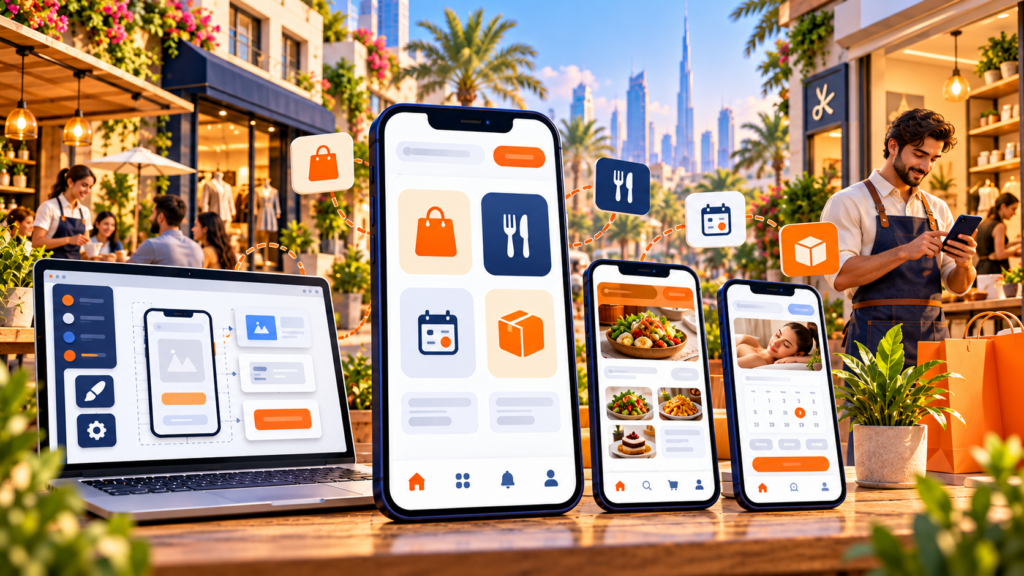
White label apps for sale are pre-built apps you rebrand and launch as your own product. The best solutions include the full set of apps a business model needs, not just a customer app. For delivery and ride-hailing, that means customer, driver, store and admin apps sharing one dispatch and payments engine. A managed white label platform such as DeliveryStack goes live in 2 to 4 weeks and starts at USD 1,000 per month, while a custom build typically takes 6 to 12 months. Before buying, check data ownership, app store publishing rights, payment gateway support, compliance and the vendor's track record. White label is the right choice for most launches; custom development fits only when your workflows are truly unique.
What are white label apps for sale?
White label apps for sale are finished software products that one company builds and many businesses license and rebrand. The buyer adds its own name, logo, colours and domain, then publishes the app under its own developer accounts. End users see only the buyer’s brand. The builder stays invisible and usually keeps maintaining the core product.
The term comes from white-label products in retail, where one manufacturer makes goods that other companies sell under their own labels. Software works the same way. One tested codebase serves many brands, so each buyer pays for configuration and licensing rather than for building from zero.
White label is not the same as a template. A template gives you code or a design to finish yourself. A white label app is a working product with a backend, admin tools and live features. You configure it; you do not have to build it.
White label is not the same as reselling. A reseller sells another company’s branded product. A white label buyer owns the brand, the customer relationship and, with the right vendor, the data.
How does a white label app work?
A white label app works by separating a shared core product from each buyer’s brand and settings. The vendor maintains the core code, servers and updates. The buyer’s branding, business rules, pricing and data sit in a configuration layer. That split is why a new brand can launch in weeks without new code.
The core engine holds the features every buyer needs, such as user accounts, payments, notifications and reporting. In a delivery platform it also runs dispatch, routing and live tracking.
The configuration layer holds what makes your business yours: service zones, commission rates, delivery fees, tax rules, promotions and payout schedules. On a good platform your team edits these in an admin panel, without a developer ticket.
The brand layer covers the app name, icon, colours, fonts, domain, email templates and app store listings. The apps are then published under your own Apple and Google developer accounts.
The managed layer is what separates a product from a code purchase. The vendor handles hosting, security patches, OS updates and app store policy changes, so the platform keeps working as iOS and Android change.
What types of white label apps can businesses buy?
Businesses can buy white label apps for almost any repeatable model. The most mature categories are on-demand delivery, ride-hailing, ecommerce, fitness, booking and fintech. White label works best where the core workflow is the same across companies and the difference lies in brand, market and pricing, not in the software itself.
Food and restaurant delivery. Restaurant chains, cloud kitchens and local marketplaces buy these to take orders directly instead of through aggregators. A complete solution includes a customer app, a driver app, a restaurant panel and an admin console. It is one of the strongest fits for white label because the order, dispatch and settlement flow is the same for most operators.
Grocery delivery. Supermarkets, dark stores and regional grocers use grocery apps to sell online with delivery slots, substitutions and weight-based pricing. The full set covers a customer app, a picker or driver app, a store panel and an admin console. Fit is strong, provided the platform handles large catalogues and stock updates in real time.
Courier and parcel. Same-city couriers and logistics startups need pickup and drop booking, proof of delivery and business accounts. A complete solution includes customer, driver and admin apps plus a business portal. White label fits well because the courier workflow varies little between markets.
Taxi and ride-hailing. Fleet owners, transfer companies and city taxi operators buy ride-hailing apps to run bookings under their own brand. The full set includes a rider app, a captain app, a fleet console and a corporate portal for business accounts. Fit is strong, though local transport licensing often takes longer than the software setup.
Bike and scooter taxi. Two-wheeler networks in dense cities depend on very fast matching and low cost per trip. The solution needs a rider app, a captain app and a dispatch console. White label suits this model because margins are too thin to fund a custom build.
Ecommerce and marketplaces. Retail brands and niche marketplaces use white label storefronts with seller panels and admin tools. Fit is good for standard selling models, but brands with complex product rules may outgrow a ready-made storefront.
Booking and home services. Salons, cleaners and repair services use booking apps with customer, provider and admin views. Fit is good when scheduling and payments follow common patterns.
Fintech and wallets. Banks and payment startups can license white label wallets and banking apps. Fit is moderate, because licensing, KYC and regulatory rules add work that the software alone does not solve.
Delivery and mobility lead the list for a clear reason. Each one needs four or more connected apps, real-time GPS, dispatch logic and three-way payments between customer, vendor and driver. That is the hardest part to build, and it is the same for most operators. Buying it ready-made saves the most time and money.
Which white label app solutions are best for each type of business?
The best white label app solution depends on your business model, not on a feature list. A single restaurant needs ordering and its own drivers. A marketplace needs vendor onboarding and commission payouts. A fleet operator needs shift and vehicle control. Choose a platform built for your model, with room to add the next one later.
Single restaurant or store
Best fit: a branded ordering app with your own driver app. You keep the customer and avoid aggregator commissions on every order. Look for live menus, prep-time estimates that feed customer ETAs, and simple driver assignment. The downside is that you must market the app yourself; an aggregator brings demand, while your own app needs you to create it.
Multi-location brand
Best fit: one shared catalogue with per-location zones and settings. Each branch needs its own delivery area, hours and stock, while the menu and brand stay central. The downside is setup effort: zones, pricing and staff roles must be mapped for every location before launch.
Multi-vendor marketplace
Best fit: a platform with vendor onboarding, commission rules and automated payouts. Your revenue comes from commissions and fees, so settlement accuracy matters more than any front-end feature. The downside is the two-sided start: you must sign vendors and attract customers at the same time.
Fleet operator or ride-hailing network
Best fit: a mobility platform with fare rules, surge pricing, driver incentives and a fleet console. Thin margins in rides make dispatch speed and driver utilisation the main levers. The downside is regulation; taxi and bike-taxi rules vary by city, so licensing can take longer than the software.
Enterprise and logistics company
Best fit: a white label core with open APIs and custom integrations. You will need to connect ERP, warehouse or CRM systems. The downside is that heavy integration work pushes timelines beyond the standard 2 to 4 week launch.
See how each model is configured on the DeliveryStack solutions page.
Is a white label app better than custom development or a no-code builder?
For most businesses launching a delivery or mobility service, a managed white label app is the better choice. It launches faster than custom development and handles real-time dispatch and payments that no-code builders struggle with. Custom development wins only when your workflows are truly unique and you have the budget and time to build them.
Managed white label platform. A platform such as DeliveryStack launches in 2 to 4 weeks for a monthly fee, with low upfront cost. Your brand appears on every screen, the product is already tested in production, and 25+ verticals run on one system. Hosting, updates and compliance are managed by the vendor, and you own the customer relationship. The trade-off is less freedom for very unusual workflows.
Custom development. A custom build usually takes 6 to 12 months and often costs USD 40,000 to 150,000 or more before launch. You get full control and full branding, and you own the customer. The downsides are cost, delay and scope risk, plus a permanent maintenance burden, because every feature is built new and only what you pay for exists.
No-code builder. No-code tools can produce an app in 4 to 8 weeks at low cost. Branding is usually partial, and the vendor handles only part of the upkeep. The main weakness is scale: real-time dispatch, live GPS and multi-party payouts tend to break these tools as order volume grows.
Aggregator API. Services such as Uber Direct let you add delivery through another company’s network, typically in 8 to 12 weeks. Setup cost is low and the provider runs the infrastructure. The catch is that the experience carries the provider’s brand, you share the customer, and you rent demand at the cost of your margin.
Timeline and cost figures for alternatives are typical ranges from DeliveryStack’s own comparisons. Your numbers depend on scope, region and team. For the full cost model, read DeliveryStack vs custom development and DeliveryStack vs no-code builders.
Why custom builds overrun. Custom delivery projects rarely fail on code quality. They fail on scope. Dispatch logic, live GPS, multi-party payouts, refunds, disputes and vendor onboarding each look small until one moves the launch date by months. A white label platform has already solved those problems in production.
How much do white label apps cost?
White label apps are sold under three pricing models: a one-time licence, a monthly subscription, or a per-order or revenue share fee. A managed white label delivery platform such as DeliveryStack starts at USD 1,000 per month. The final price depends on verticals, cities, order volume and custom features. Compare total cost over two to three years, not the first invoice.
Monthly subscription (managed). You pay a fixed monthly fee that covers the licence, hosting, updates and support. This model suits businesses without an in-house technical team, because the vendor keeps the platform running. Before signing, check whether volume caps or feature limits apply as you grow.
One-time licence or source code. You pay once, then host and maintain the code yourself. This suits companies with a strong engineering team that wants full control. The hidden cost is ongoing: hosting, security patches and iOS and Android updates all become your responsibility.
Per-order or revenue share. The vendor charges a fee on each order or takes a share of gross order value. This keeps costs low during an early pilot with small volume. The drawback is that your bill grows with every order you win, so it often becomes the most expensive model at scale.
What drives the price. Number of verticals, number of cities or zones, expected order volume, payment gateways, languages and any custom integrations all affect the quote.
Costs outside the licence. Budget separately for app store accounts (Apple charges USD 99 per year; Google charges a one-time USD 25), payment gateway fees, maps and SMS usage, and customer acquisition. Marketing is often the largest line item after launch.
See current plans on the DeliveryStack pricing page.
What should you check before buying a white label app?
Before buying a white label app, confirm who owns the data, whose accounts the apps are published on, which payment gateways work in your country, and what the vendor maintains after launch. These four points decide whether you own a business asset or rent one. Then test the full order flow in a live demo, not a slide deck.
Data ownership and export. Your customer, order, vendor and driver data should belong to you and be exportable at any time. Ask in writing whether the vendor uses your data for anything else.
App store publishing rights. The apps should go live under your own Apple and Google developer accounts. If they sit on the vendor’s account, moving away later is hard.
Complete app set. A delivery business needs customer, driver, store and admin apps that sync in real time. A solution that sells only the customer app leaves you to build the rest.
Payments and payouts. Check local gateway support, wallets, split payments and automated vendor and driver settlements. Settlement errors damage trust faster than any bug.
Compliance for your market. Ask about GDPR for Europe, PCI DSS for card data, and local rules such as RBI guidelines in India or SAMA in Saudi Arabia. See the DeliveryStack security and compliance overview.
Configuration without code. Commission rates, zones, fees and promotions should be editable from the admin panel. If every change needs a developer, your costs will climb.
Room to grow. Check whether you can add a vertical, a city or a country later without a rebuild.
Vendor track record. Look for verified reviews and live deployments. DeliveryStack is built by Aalpha Information Systems, rated 4.9/5 from 215+ verified Clutch reviews.
What are the downsides of white label apps?
The main downsides of white label apps are less control over unusual workflows, dependence on the vendor’s roadmap, and ongoing fees instead of a one-off build. These risks are real but manageable. Most can be reduced by choosing a vendor with an open API, clear data ownership terms and a custom development team behind the product.
Limited fit for unusual models. If your business depends on a workflow no platform supports, you will either compromise or pay for custom work on top. Map your must-have workflows before signing.
Vendor dependence. Your app runs on the vendor’s core code. If the vendor stops investing, your product stalls. Check how long the company has operated and how often the platform ships updates.
Recurring cost. A subscription costs more than nothing over many years. Compare it with the true cost of custom development, which includes a maintenance team, hosting and rebuilds as iOS and Android change.
Similar look to other brands. Apps on the same platform can feel alike. Strong branding, your own content and local features help you stand apart.
Exit risk. If the vendor holds your app store listings or data, leaving is painful. This is why ownership terms matter more than features.
How long does it take to launch a white label app?
A managed white label delivery app takes 2 to 4 weeks to launch. That window covers business configuration, branding, testing, loading vendor and driver data, team training and app store submission. The core platform is already built and tested, so there is no architecture or MVP phase. App store review times and local licensing can add a few days.
This is the four-step sequence DeliveryStack runs for each new deployment:
- Onboard and configure (week 1, 2 to 3 days). Delivery zones, commission structure, payout rules, order flow and onboarding requirements are mapped into the platform’s settings.
- Customise and test (weeks 1 to 2, 3 to 5 days). Your branding goes into the customer, driver and vendor apps. Order flow, payments and dispatch are tested against your own rules.
- Load data and train your team (weeks 2 to 3, 3 to 5 days). Vendors, menus or catalogues, drivers and pricing are loaded. Your operations team learns dispatch overrides, refunds, vendor approvals and payouts.
- Launch and go live (weeks 3 to 4, 2 to 3 days). The apps go live on the App Store and Google Play under your name, with launch-week monitoring before handover to standard managed support.
Read the detail of each step in how deployment works.
Why choose DeliveryStack as your white label delivery app?
DeliveryStack is a white label delivery and mobility platform for food, grocery, courier, pharmacy and ride-hailing businesses. It includes customer, driver, store and admin apps on one shared engine, branded as your own and live in 2 to 4 weeks. One platform runs both deliveries and rides, so you can add services without a rebuild.
Both branches on one engine. Delivery apps and mobility apps share the same dispatch, payments, zones and analytics. Start with food delivery, then add grocery, courier or bike taxi from the admin panel.
Your brand, your accounts, your data. Your name, logo, colours and domain appear on every screen. The apps are listed under your developer accounts, and all customer, order, vendor and driver data stays yours to export.
25+ verticals ready to configure. Food, grocery, courier and parcel, flowers and gifts, beauty, pharmacy, taxi, bike and scooter, transfers and medical transport are supported. New verticals are configured, not coded.
Managed by the team that built it. Hosting, security patches, OS updates, gateway changes and app store compliance are handled for you. DeliveryStack is built by Aalpha Information Systems, a software company with 5,500+ projects delivered for clients in 55+ countries.
Where it may not fit. If your model needs deep custom workflows, such as regulated medical logistics with bespoke chain-of-custody rules, plan for custom development on top of the platform. Aalpha’s engineering team can scope that work, but it will extend the timeline.
Explore the full DeliveryStack platform or read answers to common buyer questions in the help centre.
Frequently asked questions
What does white label app mean?
A white label app is a ready-built app that a business licenses and publishes under its own brand. The vendor builds and maintains the core product, while the buyer adds its name, logo, colours and domain. End users see only the buyer’s brand.
Where can I buy a white label app?
You can buy white label apps from software vendors that specialise in one category, such as delivery, ride-hailing, ecommerce or fitness. Choose a vendor focused on your business model. For on-demand delivery and mobility, DeliveryStack offers customer, driver, store and admin apps on one platform.
Can I sell a white label app as my own?
Yes. Licensing a white label app gives you the right to publish and operate it under your brand. Check the licence terms for limits on resale to other businesses, territory or number of brands.
Do I own the source code of a white label app?
Usually not with a managed subscription. You own your brand, app store listings and data, while the vendor owns the core code and maintains it. Source code licences exist, but you then carry hosting, security and update costs yourself.
Can a white label app be customised?
Yes. Branding, pricing, zones, commissions and workflows are configured in the admin panel. Deeper changes, such as new integrations or unique workflows, can be added as custom development on top of the platform, with extra time and cost.
Is a white label app safe and compliant?
It can be, if the vendor follows the standards for your market. Ask for evidence of PCI DSS for card payments, GDPR for European users, and local rules such as RBI or SAMA. Also confirm who handles security patches after launch.
How much does a white label delivery app cost?
A managed white label delivery app such as DeliveryStack starts at USD 1,000 per month. Price depends on verticals, cities, order volume and custom features. A custom delivery app often costs USD 40,000 to 150,000 or more before launch, plus maintenance.
Can I add more services later?
On a multi-vertical platform, yes. DeliveryStack lets you start with one vertical in one city, then add grocery, courier, pharmacy or rides from the admin panel without rebuilding the apps.
What is the next step?
White label apps for sale give businesses a tested, branded product in weeks instead of a costly build that takes most of a year. The right choice is the one built for your business model, with clear ownership of your brand, apps and data. For delivery and mobility, that means a complete set of connected apps on one engine.
If you plan to launch a food, grocery, courier or ride-hailing service, book a DeliveryStack demo to see the customer, driver, store and admin apps working together, and get a fixed quote for your market.