ChatGPT
 Claude
 Gemini
 Grok
How Much Does It Cost to Build a Delivery App in Egypt
TLDR
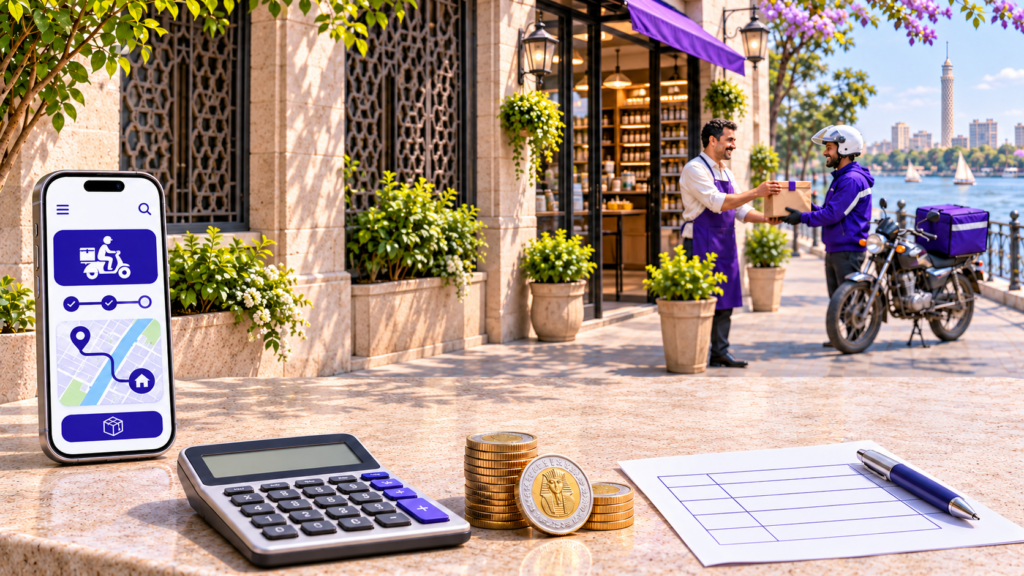
A delivery app in Egypt is a connected system of a customer app, a rider app, a merchant or store panel and an admin dashboard that handles ordering, dispatch, live tracking and payments in a market where cash on delivery, Arabic interfaces and wallet payments such as Fawry, Meeza, Vodafone Cash and InstaPay are part of everyday buying. Building one from scratch typically costs between USD 20,000 and USD 40,000 for a focused MVP, USD 40,000 to USD 90,000 for a multi-vendor marketplace, and USD 90,000 to USD 200,000 or more for a quick-commerce or super-app grade platform, with timelines of three to twelve months. The final number depends on the number of apps, the payment mix, dispatch logic, Arabic localisation and compliance with Egypt's Personal Data Protection Law. Founders who want to launch faster and spend less up front can use a white-label platform such as DeliveryStack, which ships ready-built customer, rider, merchant and admin apps that are branded and configured for the Egyptian market in weeks rather than months.
Why Egypt Is an Attractive Market for Delivery Apps in 2026
Egypt has become one of the most active delivery markets in the Middle East and Africa. The country combines a population of well over 100 million people, a young and mobile-first consumer base, and dense urban centres in Greater Cairo and Alexandria where short-distance delivery is efficient. Research firm Mordor Intelligence estimates that the Egyptian foodservice market will grow from about USD 11.93 billion in 2026 to roughly USD 24.25 billion by 2031, a compound annual growth rate above 15 percent. Delivery platforms and dark-store networks are a major driver of that growth.
Competitive activity confirms the opportunity. Talabat, owned by Delivery Hero, acquired Instashop for USD 360 million and has since opened a large fulfilment centre outside Cairo to support its quick-commerce operations. Breadfast, the Cairo-based grocery delivery company, raised USD 50 million in early 2026 and launched restaurant delivery through Breadfast Food in September 2026. Telecom operators are also entering the space, with Vodafone Egypt bundling Talabat Pro into its RED plans. This level of investment tells a new entrant two things: Egyptian consumers are comfortable ordering through apps, and the bar for user experience is already high.
There is still room for focused players. Large platforms concentrate on Cairo and broad categories. Regional cities, specialised verticals such as pharmacy, water and gas cylinder delivery, laundry, B2B supplies, and restaurant chains that want their own branded ordering channel remain underserved. These are the segments where a well-built, cost-efficient delivery app can win.
How Much Does It Cost to Build a Delivery App in Egypt?
The cost of a delivery app in Egypt is best understood in three tiers. All figures below are in US dollars because most development contracts are priced in USD, with an approximate Egyptian pound equivalent based on the November 2026 exchange rate of around EGP 54 to EGP 56 per dollar.
Basic Delivery App (MVP)
A basic delivery app costs roughly USD 20,000 to USD 40,000 (about EGP 1.1 million to EGP 2.2 million) and takes three to four months to build. This tier suits a single business, such as a restaurant chain, a pharmacy or a grocery store, that wants to take orders and deliver with its own riders. It usually includes a customer app on Android and iOS, a simple rider app, a web-based admin panel, a product catalogue, cart and checkout, cash on delivery plus one online payment gateway, basic order tracking, push notifications, and Arabic and English language support. Dispatch is usually manual or based on simple nearest-rider rules.
Mid-Level Multi-Vendor Delivery Marketplace
A multi-vendor marketplace typically costs USD 40,000 to USD 90,000 (about EGP 2.2 million to EGP 4.9 million) and takes five to seven months. This is the Talabat-style model where many restaurants or stores sell through one app. On top of the MVP features, it adds a merchant app or panel for menu, inventory and order management, automated dispatch with rider assignment rules, real-time GPS tracking with ETA, commission and payout management for vendors and riders, multiple payment methods including wallets and installment options, promo codes and loyalty, ratings and reviews, zone-based delivery fees, and an analytics dashboard.
Advanced Quick-Commerce or Super App
An advanced platform generally costs USD 90,000 to USD 200,000 or more (about EGP 4.9 million to EGP 11 million and above) and takes eight to twelve months or longer. This tier covers quick commerce with dark stores, multi-service super apps that combine food, grocery, parcels and rides, and platforms built to handle very high order volumes. Typical additions include AI-assisted dispatch and route batching, dark-store inventory and picking workflows, an in-app wallet with cashback, subscription memberships similar to Talabat Pro, demand forecasting, fraud detection for cash on delivery, multi-city and multi-country configuration, and a microservices architecture designed to scale.
Cost Breakdown by App Component
A delivery platform is not one app. It is four or five products that must work together, and each one carries its own share of the budget.
Customer App
The customer app usually accounts for 25 to 30 percent of the total build cost. It covers sign-up with phone number and OTP, address management with map pin selection, search and filters, product or menu browsing, cart and checkout, payment selection, live order tracking, order history, reorder, ratings and support chat. For Egypt, the customer app must also handle right-to-left Arabic layouts properly and allow customers to add landmark notes, because many addresses are informal or hard to geocode.
Rider or Driver App
The rider app typically represents 15 to 20 percent of the budget. Riders need order acceptance, turn-by-turn navigation, pickup and drop-off confirmation, proof of delivery with photo or OTP, cash collection tracking, earnings and payout history, and availability toggles. In a cash-heavy market such as Egypt, cash reconciliation is one of the most important rider features, because the business needs to know at all times how much cash each rider is holding.
Merchant or Store Panel
The merchant panel generally takes 10 to 15 percent of the cost. Restaurants and stores need to accept or reject orders, update menus and stock, set preparation times, run promotions and view sales reports. A tablet-friendly web app is often enough for an MVP, while a native merchant app makes sense for larger marketplaces.
Admin Dashboard
The admin dashboard usually takes 15 to 20 percent of the budget. This is where the operations team manages zones, delivery fees, commissions, riders, vendors, customers, refunds, promotions, notifications and reports. A strong admin panel reduces the number of operations staff a business needs, which matters for margins.
Backend, APIs and Integrations
The backend and integrations account for the remaining 20 to 30 percent. This includes the order engine, dispatch logic, real-time tracking infrastructure, payment gateway integrations, SMS and push notification services, maps and geocoding, and the security layer. This part of the system is invisible to users but decides whether the app stays stable during the Friday lunch rush or a Ramadan iftar peak.
Egypt-Specific Factors That Affect Delivery App Cost
Generic cost guides miss the factors that make building for Egypt different. These are the items that most often change the final quote.
Cash on Delivery and Local Payment Integrations
Payments add more cost in Egypt than in many other markets because the payment mix is wide. Cash on delivery still accounts for a large share of online orders, with various industry estimates putting it between roughly 45 and 60 percent of e-commerce transactions. At the same time, digital options are growing quickly. A competitive app usually needs card payments through a local gateway such as Paymob, Fawry, Kashier or PayTabs, Meeza debit cards, mobile wallets such as Vodafone Cash, InstaPay, and buy now, pay later options such as ValU. Each additional payment method adds integration, testing and reconciliation work. Supporting cash on delivery properly also means building rider cash limits, end-of-day settlement and fraud rules for fake or refused orders.
Arabic Localisation and Right-to-Left Design
Proper Arabic support typically adds 10 to 15 percent to design and front-end effort. Right-to-left layouts affect every screen, icon direction, number formatting and date display. Content should be written in clear Egyptian Arabic rather than literal translation, because conversion rates depend on customers understanding offers and delivery terms instantly.
Addressing, Maps and Location Accuracy
Address accuracy is a real cost driver in Egypt. Many residential areas rely on building numbers, compound names and landmarks rather than standardised street addresses. Apps that perform well usually combine map pin drops, saved addresses, landmark fields, rider notes and call-to-customer features. Map and geocoding API usage also becomes a recurring cost as order volumes grow, so the architecture should cache locations and limit unnecessary API calls.
Data Protection Compliance
Compliance with Egypt’s Personal Data Protection Law must now be planned from day one. The Executive Regulations of Law No. 151 of 2020 were issued on 1 November 2025 through Ministerial Decree No. 816 of 2025, which started a one-year grace period for compliance. The regulations require most data controllers and processors to obtain a licence or permit from the Personal Data Protection Centre, set rules on consent and data retention, and require a separate permit before personal data is transferred outside Egypt. Foreign controllers without a branch in Egypt must also appoint a local representative. For a delivery app, this affects where the servers are hosted, how consent screens are designed, how long order and location history is kept, and which third-party services receive customer data. Budget for legal review and for the engineering work needed to support data access and deletion requests.
Currency Volatility
The exchange rate has a direct effect on project budgets. The Egyptian pound moved from around EGP 47.7 per dollar in late February 2026 to more than EGP 55 in October 2026. Founders who raise money or earn revenue in Egyptian pounds should agree on fixed USD milestones at the start, keep a contingency of 10 to 15 percent, and choose cloud and API services with predictable pricing.
Taxes and Invoicing
Tax rules also shape the platform. Egypt applies 14 percent VAT on most goods and services, and the Egyptian Tax Authority requires e-invoicing for many businesses. Marketplaces that collect payments on behalf of vendors need commission invoicing and payout reports that match these requirements, which adds work to the finance module of the admin panel.
Build Approach: Custom Development vs White-Label vs Clone Scripts
The single biggest decision that affects cost is how the platform is built.
Custom Development
Custom development gives full control but carries the highest cost and longest timeline. It is the right choice when the business model is genuinely new, when the platform must integrate deeply with existing ERP or POS systems, or when the founders plan to raise significant venture funding and need proprietary technology. Expect the full ranges described above and plan for at least four to twelve months before launch.
White-Label Delivery Platform
A white-label delivery platform usually costs USD 5,000 to USD 25,000 for setup and branding (about EGP 270,000 to EGP 1.35 million), plus a monthly licence or support fee, and can launch in two to six weeks. The core apps already exist and have been tested in live markets (see how deployment works), so the work focuses on branding, Arabic content, payment gateway setup, zones and pricing rules, and any custom features the business needs. This approach suits restaurant chains, grocery and pharmacy businesses, regional aggregators and logistics companies that want to validate demand quickly and keep capital for marketing and rider acquisition.
Clone Scripts
Low-cost clone scripts sold online are tempting but risky. They often cost a few thousand dollars, but many lack proper Arabic support, local payment integrations, security hardening and ongoing updates. The money saved at the start is frequently spent later on fixes, rewrites or lost customers.
Ongoing Costs After Launch
The build cost is only part of the total investment. Founders should budget for running costs from the first month.
Cloud hosting and infrastructure typically run from USD 300 to USD 2,000 per month depending on order volume, with higher costs for real-time tracking at scale. Maps, SMS and notification services grow with usage, and OTP messages in particular can become a noticeable line item. Payment processing fees vary by provider and method, with card and wallet fees commonly falling between about 1 and 3.5 percent per transaction plus fixed fees on some channels. Maintenance and updates usually cost 15 to 20 percent of the original build cost per year, covering bug fixes, operating system updates, security patches and small improvements. Compliance costs include data protection licensing fees, legal review and periodic security audits. App store fees are small, with Apple charging an annual developer fee and Google charging a one-time registration fee.
How Long Does It Take to Build a Delivery App in Egypt?
Timelines depend mainly on scope and build approach. A white-label launch typically takes two to six weeks. A custom MVP takes about three to four months, a multi-vendor marketplace five to seven months, and an advanced quick-commerce or super-app platform eight to twelve months or more. A typical custom project moves through discovery and scoping, UX and UI design in Arabic and English, development in sprints, integration with payment and map services, quality assurance including real-device testing in Egyptian network conditions, a soft launch in one zone, and then a gradual city-wide rollout.
How to Reduce the Cost of Building a Delivery App in Egypt
Start with one city, one vertical and one zone. Launching in a few neighbourhoods of Cairo, Giza or Alexandria with a tight category focus lets the team prove unit economics before spending on expansion features.
Prioritise the features that drive orders. Fast checkout, reliable tracking, cash on delivery and one or two popular wallets matter far more at launch than loyalty programmes or AI recommendations.
Use cross-platform frameworks. Flutter or React Native allow one codebase for Android and iOS, which reduces build and maintenance costs. This matters in Egypt, where Android has a large share of smartphone users.
Choose a white-label base and customise only what differentiates you. Building standard features such as carts, rider apps and admin reports from scratch rarely creates competitive advantage.
Work with a team that already knows the market. A partner that has integrated Egyptian payment gateways and designed Arabic delivery flows before will avoid expensive trial and error.
How DeliveryStack Helps You Launch a Delivery App in Egypt
DeliveryStack is a white-label on-demand delivery platform built by Aalpha Information Systems, a software development company with more than 5,500 completed projects across 55+ countries. DeliveryStack provides ready-built customer apps, rider apps, merchant panels and an admin dashboard that can be branded under your name and configured for food, grocery, pharmacy, parcels and other on-demand services.
For Egyptian businesses, DeliveryStack covers the market-specific requirements discussed above. That includes Arabic and English interfaces with right-to-left support, cash on delivery with rider cash tracking, integration with local payment gateways, zone-based pricing and delivery fees, landmark-friendly address capture, and real-time tracking. Because the core platform is already built, the budget goes into your brand, your workflows and your growth rather than into rebuilding standard features. When a business needs something unique, the Aalpha engineering team can extend the platform with custom modules and integrations.
You can see how other operators have launched on the platform on the DeliveryStack case studies page. To compare plans, see DeliveryStack pricing. To get a cost estimate for your Egyptian delivery app, book a call with the team.
Frequently Asked Questions
How much does it cost to build a food delivery app like Talabat in Egypt?
A Talabat-style multi-vendor food delivery app with customer, rider, restaurant and admin apps usually costs between USD 40,000 and USD 90,000 for a solid first version, which is roughly EGP 2.2 million to EGP 4.9 million at November 2026 exchange rates. Matching the full feature depth of a mature platform, including subscriptions, quick commerce and AI dispatch, can push the cost above USD 150,000. A white-label platform can deliver a comparable core experience for a much lower setup cost.
What is the cheapest way to launch a delivery app in Egypt?
The most cost-effective way is a white-label delivery platform. Setup typically costs USD 5,000 to USD 25,000 plus a monthly fee, and launch can happen within two to six weeks. This lets a business test demand in one city before committing to custom development.
How long does it take to develop a delivery app in Egypt?
A white-label delivery app can go live in two to six weeks. A custom MVP takes three to four months, a multi-vendor marketplace five to seven months, and an advanced platform eight to twelve months or longer.
Do delivery apps in Egypt need to support cash on delivery?
Yes. Cash on delivery remains one of the most common payment methods for online orders in Egypt, so any delivery app aimed at the mass market should support it, along with cash reconciliation for riders. Offering cards, Meeza, Vodafone Cash, InstaPay and installment options alongside cash helps increase digital payment adoption over time.
Which payment gateways work best for delivery apps in Egypt?
Popular choices include Paymob, Fawry, Kashier and PayTabs. Paymob and Fawry support cards, Meeza, mobile wallets and cash payment codes, which makes them a practical fit for delivery apps serving Egyptian consumers. The right choice depends on fees, settlement times, supported methods and the quality of their APIs.
Does a delivery app in Egypt need to comply with data protection law?
Yes. Egypt’s Personal Data Protection Law No. 151 of 2020 and its Executive Regulations, issued in November 2025, apply to apps that process personal data of people in Egypt. Delivery apps collect names, phone numbers, addresses and location history, so they need proper consent flows, data retention policies and, in most cases, a licence from the Personal Data Protection Centre. Transferring data outside Egypt requires a separate permit.
Should I build a native app or a cross-platform app for Egypt?
For most delivery businesses, a cross-platform app built with Flutter or React Native is the better choice. It reduces cost and time to market and performs well on the mid-range Android devices that many Egyptian customers and riders use. Native development is worth considering only for very high-scale platforms with complex device-level requirements.
What ongoing costs should I expect after launching a delivery app?
Plan for cloud hosting, maps and SMS usage, payment processing fees, maintenance at around 15 to 20 percent of the build cost per year, compliance costs and marketing. Hosting alone often ranges from USD 300 to USD 2,000 per month depending on order volume.
Final Thoughts
The cost to build a delivery app in Egypt ranges from a few thousand dollars for a white-label launch to well over USD 200,000 for a large custom platform. The right budget depends less on the app itself and more on the business model, the payment mix, the target cities and how fast you need to reach the market. Egypt rewards operators who get the local details right, from cash on delivery and Arabic interfaces to address accuracy and data protection compliance. Founders who start focused, prove demand in one area and build on a proven platform give themselves the best chance of reaching profitability in this growing market.